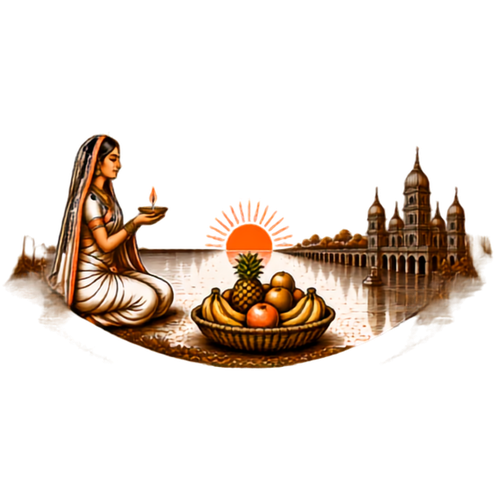
Chhath Puja is four days long. Each day has a specific name, a specific ritual, and a specific meaning. Outsiders often encounter only the most visible moment — people standing in rivers at dawn or dusk, hands raised, facing the sun — and find it striking without understanding what has led to that moment.
The four days, briefly
Nahay Khay — ritual bathing, one clean meal of lauki, rice, and dal. Kharna — full fast, broken in the evening with kheer and Thekua — the only food consumed until the final ritual is complete. Sandhya Arghya — the evening offering to the setting sun, made standing in the river, soop in hand, filled with fruits and Thekua. Usha Arghya — the morning offering to the rising sun, before dawn, completing the 36-hour fast.
"Chhath koi dekhne ki cheez nahi — karne ki cheez hai."
( Chhath is not something you watch — it is something you do. )
Why it matters to Bihar's diaspora
In cities like Pune, Chhath has become an important gathering point for Bihar's communities. Ghats are set up at rivers and lakes. The festival in a new city is not diminished — it is, in some ways, more necessary, because it creates the gathering that migration disrupts. The Thekua is one thread in this fabric: made at home, not bought, not approximated.