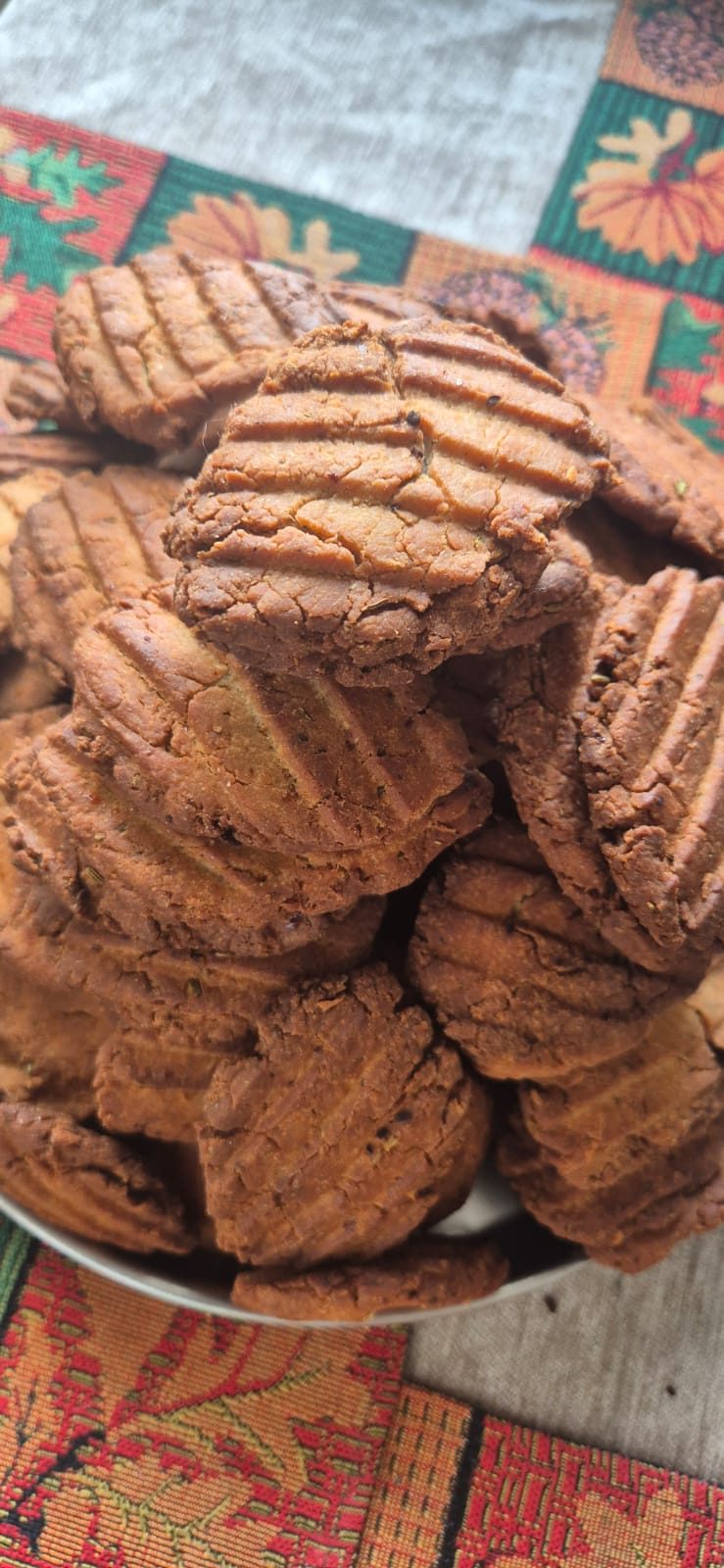
If you have only ever had Thekua from a sweet shop, you may not know that you are missing something. Same shape, same name — but the texture is different. Softer. More uniform. It breaks cleanly instead of crumbling.
What happens when hands press it
When Rashmi presses each piece by hand, she is not following a timer. She is following feel. The resistance of the dough tells her how much water it has absorbed, when it has been worked enough. She has done this so many times that the information is no longer conscious — she knows in the way you know something your body learned rather than your mind.
"Main nuskha nahi dekhti — dough dekhti hoon. Jab sahi lagta hai, tab sahi hota hai."
( I don't check the recipe — I check the dough. When it feels right, it is right. )
No mould. No machine. Just hands.
Rashmi hand-presses every piece. No sancha mould, no machine. The variation is measurable in the final product: in how it holds shape during frying, in how it breaks when you bite, in how it keeps for a month without going stale. The tradition encodes the technique. That is why it has not been changed.