Migration is a kind of editing. When you move, you carry what fits and leave behind what doesn't. Food is almost always the last thing to go — it is smaller than furniture, lighter than furniture, and more necessary than most things people pack.
The tiffin as a vessel of memory
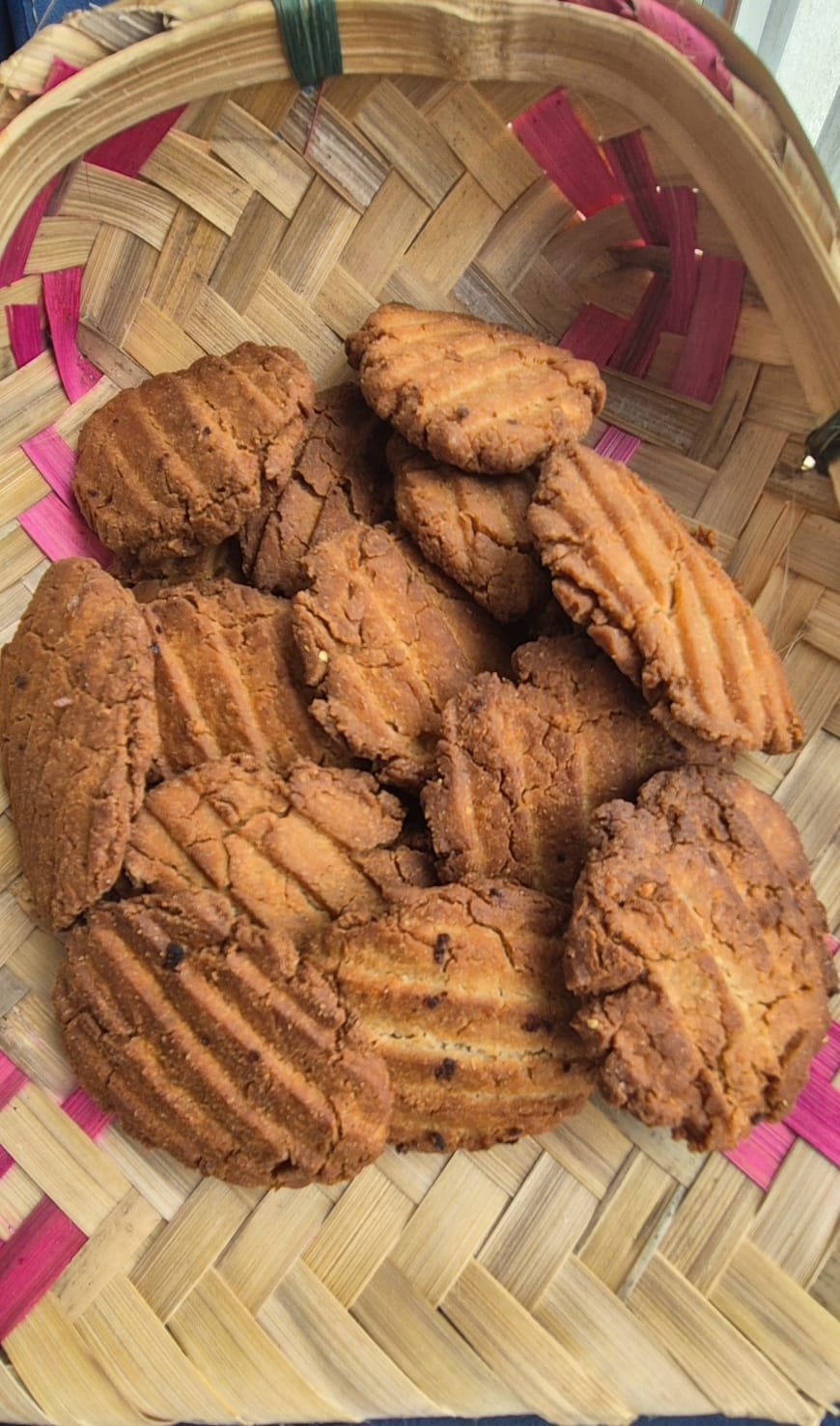
For much of the 20th century, Thekua traveled in tiffins. Mothers sent it to sons in college hostels. Grandmothers made it at Chhath and kept some aside so grandchildren visiting from Bombay could take it back. It survived train journeys because it was designed to — dense, low-moisture, wrapped in cloth.
"Maa ne Delhi bheja tha — atte ke dabbe mein chipke hua. Khade khade kha liya aur aankhein bhar aayi. Udaas nahi tha — bas ghar jaisa laga."
( Maa had sent it packed in flour to keep it intact. I ate it standing up and my eyes filled. Not sad — it just felt like home. )
What changes when context changes
The recipe itself is stable — it has not meaningfully changed in generations. What changes is availability. In rural Bihar, every household made its own Thekua. In Pune, Rashmi fills that gap — not as nostalgia, but as quality. When it tastes right, it carries everything it was supposed to carry.